
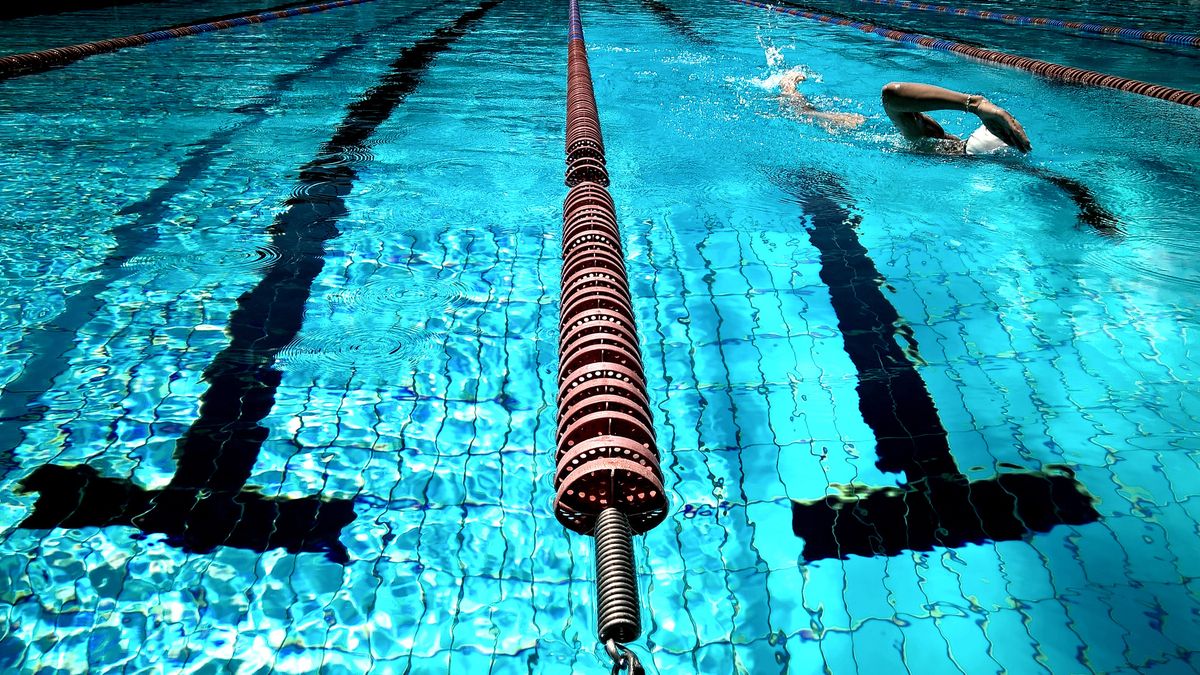
Swimming gets sold as the gentle option, the thing you do when your joints are done with running. That undersells it. For your heart, swimming for cardiovascular health is one of the most potent tools you have, and the longevity data behind it is genuinely strong. The catch is that a few easy lengths will not do it. The fitness comes from how you structure the session. Here is what the science actually says, and the workouts that build it.
What the science actually says
Start with the headline. In a study of more than 40,000 men followed for decades, swimmers had roughly 50 percent lower all-cause mortality than men who were sedentary, who walked, or who even ran (Chase, Sui, and Blair, 2008). Observational data like this cannot prove cause on its own, but a group that large is hard to wave away. Grade it Strong.
Blood pressure is more direct. When previously sedentary adults over 50 swam for 12 weeks, their systolic blood pressure fell from 131 to 122 mmHg, and the stiffness in their arteries eased by about 21 percent (Nualnim, 2012). A control group doing gentle relaxation changed nothing. For blood pressure and vascular health, the evidence is Strong.
For raw engine size, swimming lifts your VO2 max, which is one of the best single markers for how long and how well you live. Eight weeks of consistent training raises it by around 6 percent, and interval work raises it faster than easy laps do. Grade this Strong to Moderate, depending on how hard you are willing to train.
Why the water rewrites your training zones
Swimming is not just running in a pool. You are horizontal, your whole body works at once, and you breathe against water pressure, which trains the muscles around your lungs. The water also cools you, and the horizontal position helps blood return to your heart, so your heart rate runs roughly 10 to 15 beats per minute lower than it would on land at the same effort. Do not copy your running heart rate zones into the pool. Go by pace and by feel instead.
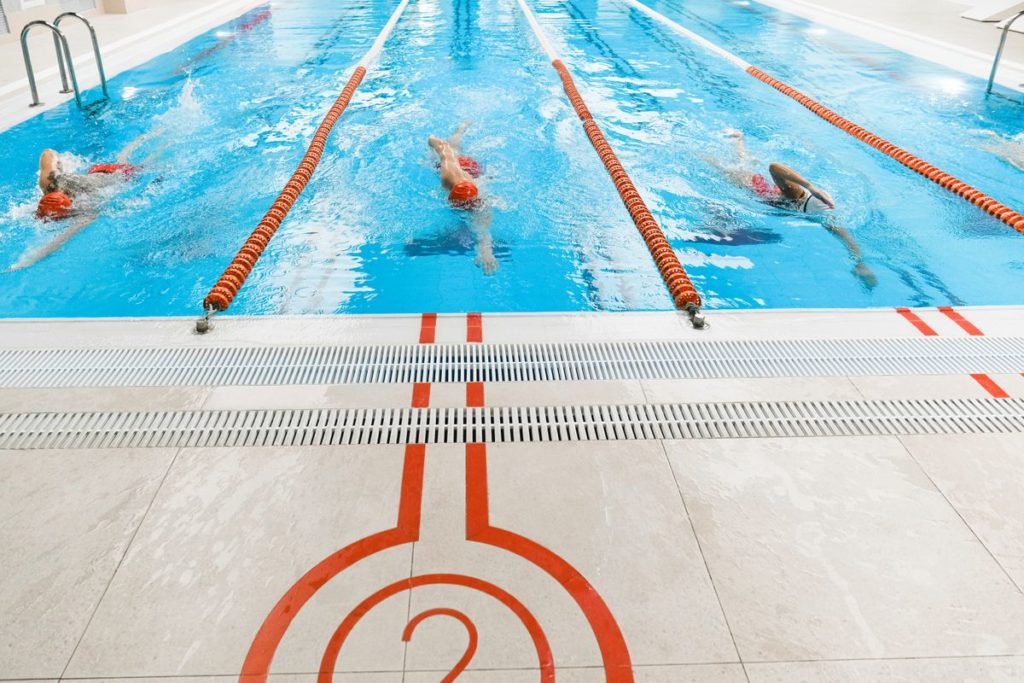
The workouts that actually build cardio
Three session types cover it. Rotate them across the week.
| Session | Goal | Example set | Effort |
|---|---|---|---|
| Aerobic base | Build the engine | 20 to 40 min easy, or 6 x 200 with 20s rest | Conversational, could keep going |
| Threshold | Raise your sustainable pace | 5 x 100 with 15s rest | Hard but controlled, 7 or 8 out of 10 |
| Intervals (VO2) | Push the ceiling | 10 x 50 fast with 20 to 30s rest | Near flat out, 9 out of 10 |
Warm up with 200 to 400 easy first, and add 100 easy to finish. If you are new, halve the reps and take longer rest. The point is not to thrash every length. It is to spend real time at each effort, because that is what forces your heart and lungs to adapt.
How I program it
I swim two to three times a week and keep it simple: one aerobic base swim, one threshold set, and one interval session. When my martial arts week is heavy, I drop the intervals and keep the easy base so swimming supports the sport instead of burying me in fatigue. And I earned the right to push hard by fixing technique first, because you cannot hold a fast pace with a stroke that fights the water. If your form falls apart the moment you breathe, start there before you chase the hard sets.
Swimming rewards patience. The longevity numbers are real, the blood pressure drop is real, but only if you show up two or three times a week and give the hard sets their due. Build the base, then earn the speed. Which session are you missing right now, the easy miles or the hard intervals?
Leave a Reply