
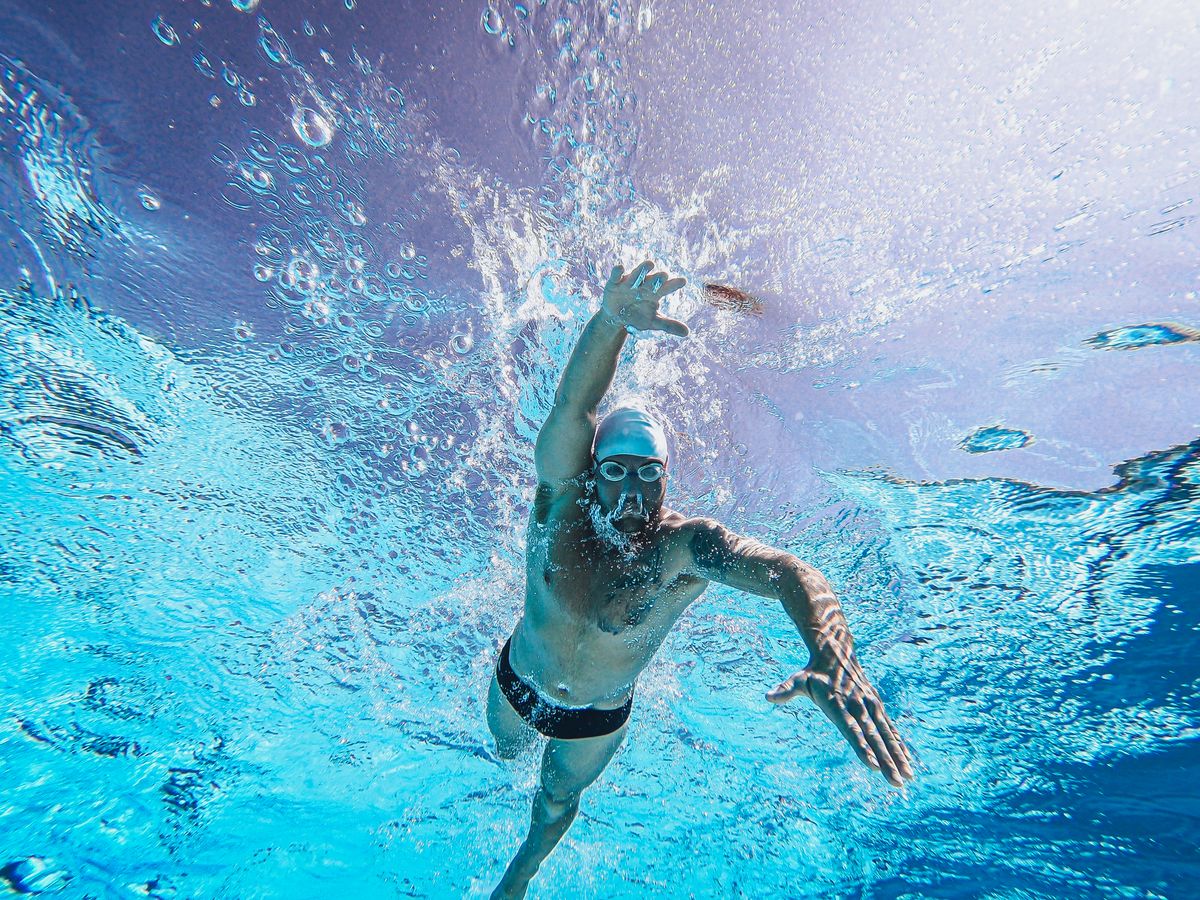
The thing that makes new swimmers quit is almost never fitness. It is breathing. You feel out of air after half a length, your heart rate spikes, and you grab the wall convinced you are unfit. You are not. You are holding your breath. Fix that one habit and swimming suddenly feels calm. Here is how to breathe while swimming freestyle, step by step.
The one rule: never hold your breath
On land you inhale and hold. In the water that is the enemy. If you hold your breath while your face is down, carbon dioxide builds up, and it is the rising CO2, not the lack of oxygen, that triggers the desperate, panicky urge to breathe. So the rule is simple: whenever your face is in the water, you are breathing out, slow and steady, through your nose or mouth. Then all you have to do as you turn is grab a quick breath in.
Breathe by rotating, not lifting
Do not crank your head up to the front. It sinks your legs and wrecks your stroke. Let your body rotation carry your head instead. As you roll to one side, turn just enough to bring your mouth to the surface, keeping one goggle in the water. There is a little trough beside your head where you can sip air without lifting at all. Turn with the body, breathe, and roll back down.
Get the timing right
Exhale steadily while your face is down, then time a quick inhale to your rotation. How often is up to you. Every two strokes gets you more air when you are working hard. Every three, alternating sides, is called bilateral breathing and it keeps your stroke balanced and straight. Neither is wrong. Beginners often find every-two easier at first, then add bilateral later.
Drills that fix it fast
- Bobbing at the wall: sink under, blow all your air out slowly, come up and inhale. Repeat until exhaling underwater feels automatic.
- Kick on your side with one arm extended, breathing up to the ceiling, to feel breathing come off your rotation.
- A snorkel takes breathing out of the equation for a while, so you can fix the rest of the stroke, then reintroduce it.
Still gasping?
If you are still out of breath, the cause is almost always one of two things: you are swimming too hard, or you are holding your breath. Slow right down and make sure you are fully emptying your lungs underwater. Air out is what makes room for air in.
Get this and the rest of the stroke gets easier overnight. Put it together with Freestyle Technique, and once you are comfortable, build your engine with Swimming for Fitness.
This is technique guidance, not medical advice. Never practise breath work or swimming alone if you are unsure of your ability, and get out if you feel lightheaded.
Leave a Reply