

Ask an active fifty-, sixty- or seventy-year-old what they actually want, and it is rarely a number on a barbell. It is to keep moving. To get off the floor without a plan, carry the shopping, play with grandkids, travel, train, and stay independent. Mobility is the currency of a good older life, and it is the thing that quietly slips if you let it. Sports massage is not usually filed under “aging well,” but it should be, and here is why.
What actually changes as we age
Tissue gets stiffer with the years. Muscles lose a little elasticity, fascia tightens, joints move through a smaller range, and circulation is not quite as brisk as it was. None of that is a sentence, and plenty of it is driven more by disuse than by age itself. But the drift is real, and left alone it compounds: a bit less range leads to a bit less movement, which leads to still less range. The people who stay mobile into their later decades are almost always the ones who keep actively working against that drift rather than accepting it.
How regular massage works against the drift
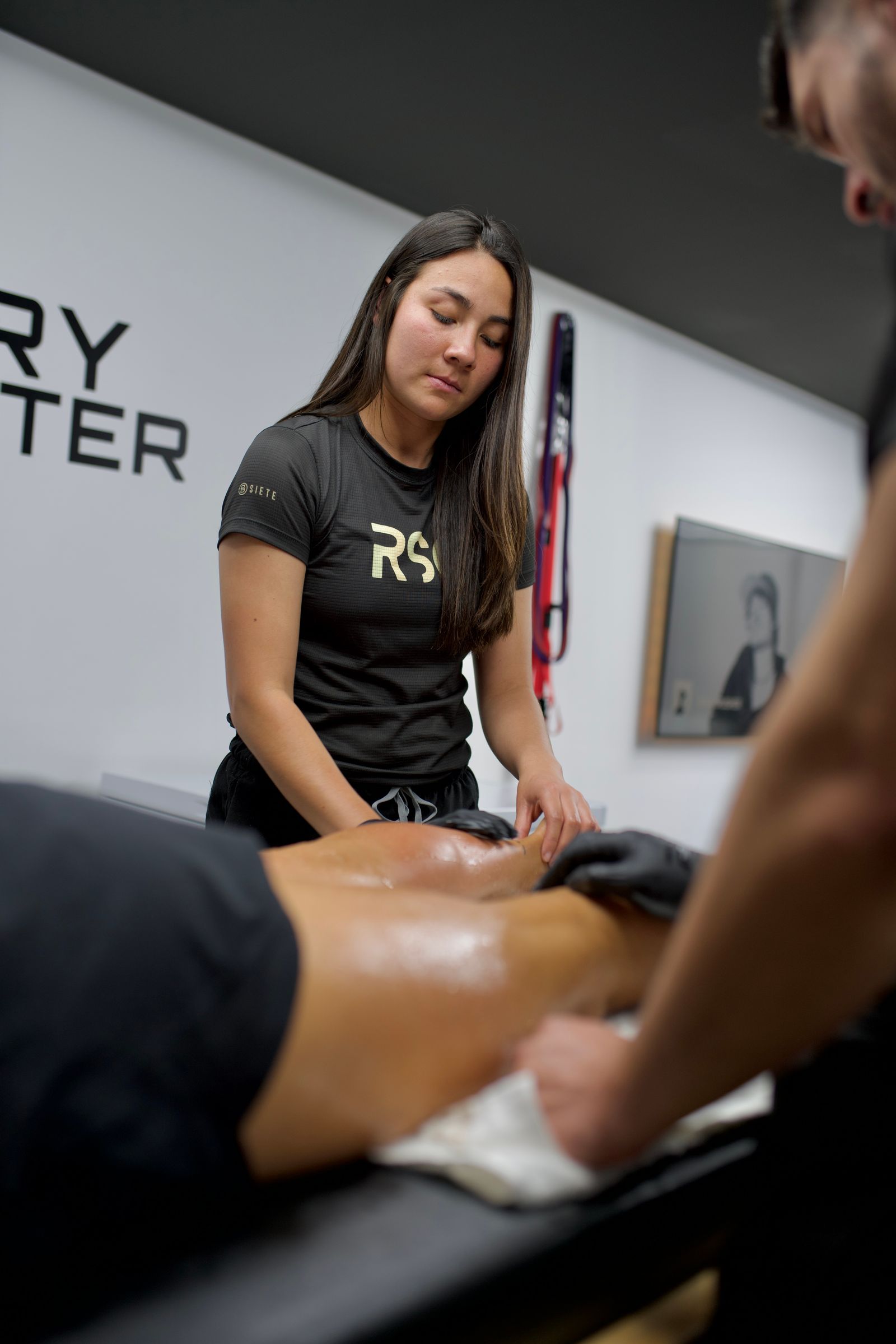
Massage will not stop you aging. What it does is keep the soft tissue supple and the joints moving freely, so the everyday drift has less chance to set in.
Mobility and flexibility. Regular hands-on work keeps muscles and fascia pliable rather than letting them shorten and stiffen. Supple tissue moves through a fuller range, and range is exactly what you are trying to protect. This is the benefit that matters most as the years add up, because range lost is range you then have to fight to win back.
Circulation. Blood flow tends to slow with age, and good circulation is what carries oxygen and nutrients to muscle and joint tissue and clears waste away. Massage gives that flow a regular push, which supports tissue health and the general feeling of moving well.
Joint and muscle health. Stiff, tight muscles pull on joints and change how you load them, which over years is a recipe for wear and grumbling. Keeping the muscles around a joint loose and balanced takes some of that strain off and helps the joint move the way it was built to.
Recovery that respects an older system. Active bodies still train at sixty and seventy, but they recover more slowly than they did at thirty. Regular massage supports that recovery so you can keep training consistently, and consistency is what actually preserves strength and mobility over time.
Stress, sleep and quality of life. The relaxation side is not a footnote here. Lower tension, calmer nights and a body that simply feels good to live in all feed into staying active, and staying active is the whole game. Feeling loose and capable makes you more likely to go for the walk, the swim, the class, rather than talk yourself out of it.
Not just for athletes
You do not have to be chasing a personal best to benefit. If you walk, garden, swim, do a class, or just want to keep doing your own daily life without stiffness deciding your limits, the same principles apply. This is maintenance for the body you want to still be using in twenty years, whatever your starting point.
A sensible way to start
If you are newer to it, ease in rather than booking the deepest session available.
- Start gentler and build. Tell the therapist your age, activity and any conditions, and let the pressure be firm but comfortable. Deep tissue is a place to work up to, not a starting point.
- Find a rhythm you will keep. Monthly is a realistic and useful cadence for most active older adults. More often if you train hard, but regular beats occasional every time.
- Pair it with movement. Massage keeps the door open, your own movement walks through it. Combine it with regular walking, mobility work, strength training and stretching. Keep lifting something, keep stretching, keep moving. The massage makes those easier and more comfortable, it does not replace them.
- Flag anything medical first. If you have osteoporosis, blood-thinning medication, recent surgery or a specific condition, clear it with your GP and tell the therapist. A good one will adapt the work to you.
Aging well is not about clinging to your thirty-year-old body. It is about keeping the one you have supple, capable and yours to command. Regular sports massage is one of the quieter, kinder tools for doing exactly that, less about pushing limits and more about protecting the freedom to keep moving.
New to the idea of massage as an ongoing habit rather than an injury fix? Start with Sports Massage as Regular Recovery, Not Injury Repair.
General wellness information, not medical advice. If you have a health condition, check with your GP before starting regular massage.
Leave a Reply