
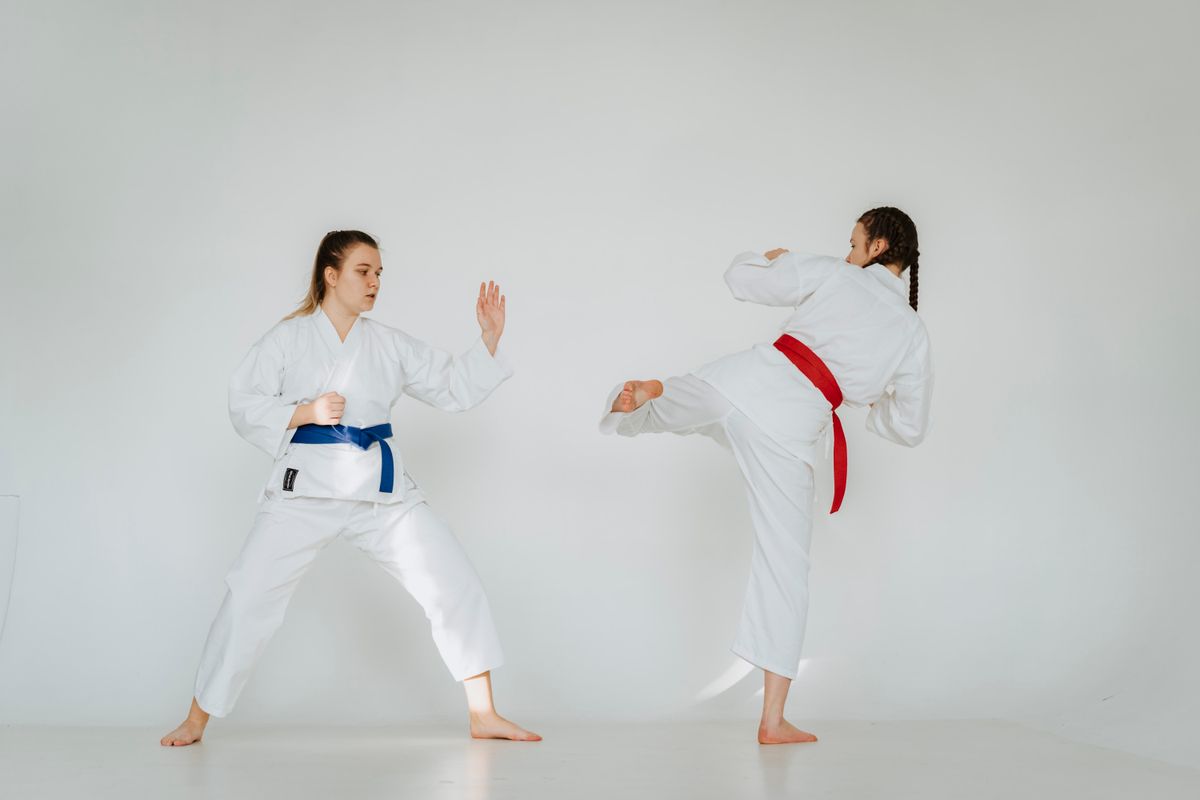
Walk into any gym and the beginner wants the spinning kick or the flashy submission. I understand the pull. But after years on the mats as a student and as an instructor, I can tell you the people who progress fastest are the ones who fall for the boring fundamentals first. The essential martial arts techniques for beginners are not glamorous. They are the stance you hold, the way you move your feet, one clean strike, and knowing how to fall without getting hurt. Master those and everything else has somewhere to attach. Skip them and you are building on sand.
The techniques that matter first
If you learn nothing else in your first month, learn these five. None of them care which art you chose. They carry over from boxing to judo to Brazilian jiu jitsu to Muay Thai.
- A balanced stance and a tight guard
- Footwork that keeps your base under you
- One clean straight strike thrown from that base
- How to fall and roll safely
- How to breathe and stay relaxed under pressure
Stance and guard: the foundation
Everything starts here. Feet about shoulder width, one foot back, knees soft, weight balanced between both legs. Hands up, elbows in, chin down behind your lead shoulder. A good stance lets you move, absorb a hit, and strike without toppling over. The most common beginner mistake is standing square and flat with the chin high, which leaves you easy to move and easy to hit. Fix the stance and half of your early problems disappear on their own.
Footwork: move without crossing your feet
Distance is the whole game, and footwork is how you control it. Learn to step and slide in small movements while keeping your feet under you. Never cross your feet, because the moment you do you have no base and you can be swept or knocked down. Push off the foot furthest from where you want to go. Slow and balanced beats fast and off balance every time. You are training your body to change range without ever giving up your posture.
One clean strike: the jab
You do not need ten techniques. You need one done well. For striking arts that is the jab, the lead straight punch. Extend from your stance, rotate the shoulder slightly, snap it back, and keep the other hand glued to your chin. It is your range finder, your setup, and your safest weapon. For grappling arts the equivalent first tool is a strong tie up: a solid collar and elbow grip that lets you feel and steer your partner. Either way, drill one reliable weapon before you collect a hundred you cannot use under pressure.
How to fall: the most underrated skill
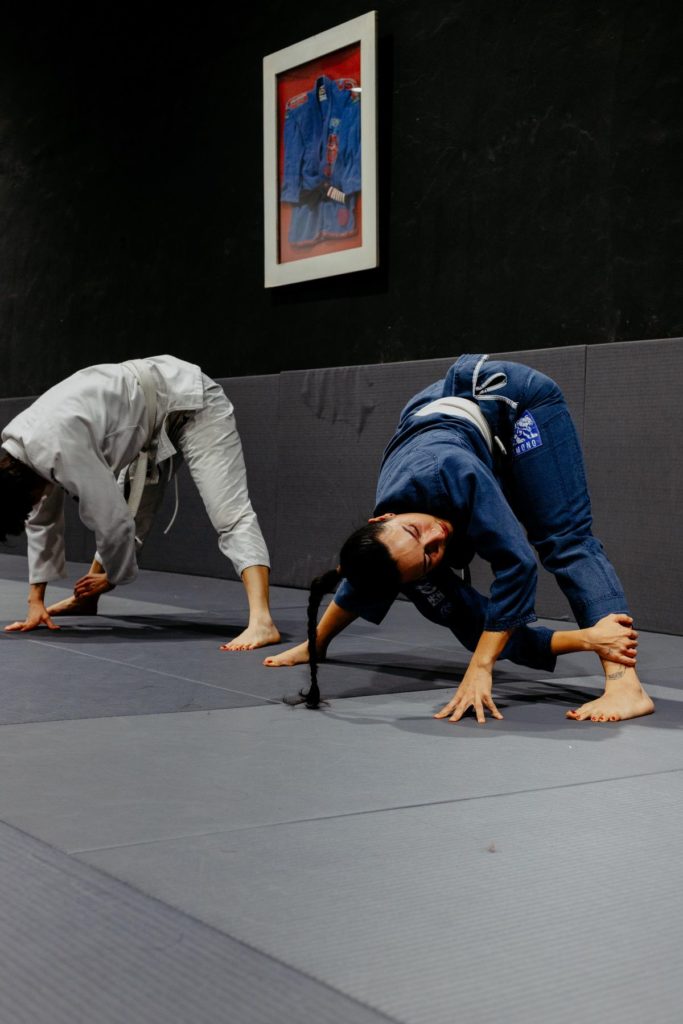
This is the one beginners skip and later regret. Before you learn to throw, learn to be thrown. A proper breakfall spreads the impact across your arm and back, keeps your head off the floor, and lets you get up unhurt. Slap the mat, tuck your chin, exhale on impact. Most early injuries come from bad falls and ego, not from technique. If you train a grappling art, safe falling is what keeps you on the mats for years instead of weeks.
Breathe and relax
Watch any nervous beginner and you will see two things: held breath and locked shoulders. Both drain your energy in under a minute and telegraph every move. Breathe out on effort, keep your shoulders loose, and let your hands stay heavy and ready rather than clenched. Relaxation under pressure is not a personality trait. It is a skill you drill, the same as a punch or a grip, and it is often the difference between a green belt who gasses and one who lasts.
How I teach it
When someone new steps onto my mats, we spend the first sessions on stance, movement, and falling before a single named technique. It frustrates them for about a week. Then it clicks, and they see that every advanced move is just these basics rearranged. Start by picking the art that actually fits your body and your life, be honest with yourself about what you want from it, and then train the boring things until they run without you thinking. Balance, flexibility, and strength quietly underpin all of it, so build those in parallel.
You do not rise to the level of your ambitions. You fall to the level of your fundamentals. So which one are you neglecting right now: your stance, your footwork, or your fall?
Leave a Reply