
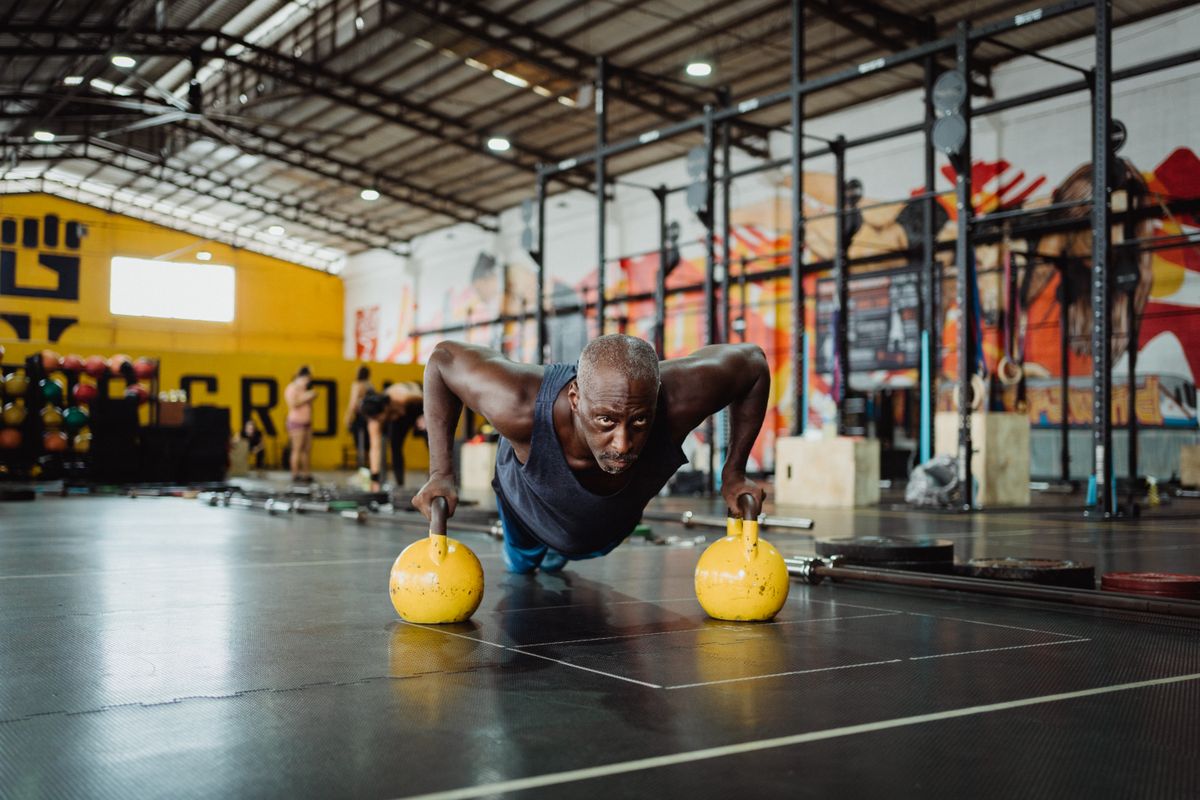
Many think of the gym as being about how you look. As you get older, it quietly becomes about something bigger: whether you can carry your own shopping, get up off the floor without a hand, and keep your mind sharp. Strength training is the closest thing we have to a drug that slows aging across the body and the brain at once, and unlike most things that sound that good, the evidence actually holds up.
Here is the direct answer. From your 30s onward you lose muscle every decade, and strength drops even faster than size. Resistance training reverses that at any age, protects your bones, your metabolism, and your independence, and there is solid evidence it lifts mood and sharpens thinking too. You do not need to have started young. You need to start.

The problem: muscle leaves quietly
The medical name is sarcopenia, the age-related loss of muscle and strength. Rough numbers: after about age 30 you lose somewhere around 3 to 8% of your muscle per decade, and the loss speeds up after 60. Strength and power fade even faster than the muscle itself.
This is not just a vanity issue. Loss of strength and power is one of the best predictors of falls, disability, and losing your independence later in life. The good news is that it is one of the most reversible problems in all of aging.
Muscle comes back, even in your 80s and 90s
This is the part that should give everyone hope. In classic studies of frail nursing-home residents, some in their 90s, a few weeks of progressive resistance training produced real gains in strength and mobility. People who arrived using walkers left moving better. If it works for a frail 90-year-old, the excuse of being “too old to start” does not survive contact with the evidence.
Your muscles respond to the demand you place on them at any age. Place no demand, they shrink. Place a progressive one, they adapt. That mechanism does not switch off because of a birthday.
What it protects, physically
The list is long and well supported:
- Bone. Loading the skeleton drives bone density and fights osteoporosis, which matters enormously as fracture risk climbs with age.
- Metabolic health. Muscle is where you dispose of blood sugar, so more of it improves insulin sensitivity and body composition.
- Independence. Getting off the floor, up the stairs, and out of a chair are all strength tasks. Keep the strength, keep the freedom.
- Fall prevention. Stronger legs and better balance mean fewer falls, and falls are a leading cause of serious injury in older adults.
What it protects, mentally
This is where it surprises people. Resistance training is not just good for the body.
- Mood. Meta-analyses find that resistance training meaningfully reduces symptoms of depression and anxiety, with a moderate effect that holds across ages.
- Cognition. The evidence is younger but promising: strength training is linked to better executive function and may help protect the aging brain.
- Sleep and confidence. Lifting improves sleep quality for many people, and the simple fact of getting measurably stronger builds a sense of capability that spills into the rest of life.
I grade the physical benefits as strong, the mood benefits as moderate to strong, and the cognitive benefits as promising but still building. The link between muscle strength and living longer is real and consistent, though it comes largely from observational studies, so treat the “lift to live longer” headline as a strong association rather than a proven guarantee.
How to start, at any age
You do not need to train like a bodybuilder. You need to train like someone who intends to keep their body for decades:
- Two to three sessions a week, full body, with a rest day between.
- Compound movements you can scale: a squat or sit-to-stand, a hinge, a push, a pull, and a carry.
- Progressive but patient. Start lighter than you think, nail the movement, then add a little over time.
- Do not fear effort. Older muscle still needs a real challenge to adapt. Working in a range of about 6 to 15 reps, near but not to failure, covers most people well.
- Eat enough protein, roughly 1.6 grams per kilogram of bodyweight a day, to give the muscle what it needs to rebuild.
If you are older, deconditioned, or managing a health condition, begin with a professional who can check your movement and set the starting load. That is a smart start, not a weakness.
I lift partly for now and partly for the version of me at 70 who still wants to roll on the mats, swim, and move like himself. I have watched training partners in their 60s get visibly stronger, steadier, and happier within months of starting. It is never a lost cause, and it is never too late. The best day to start protecting your future body and mind was years ago. The second best is today.
Pair the lifting with the recovery that keeps you doing it, in our recovery methods posts, and get the fuel right with How Much Protein Do You Need.
This is general education, not medical advice. Before starting a new exercise program, especially if you are older or have a health condition, check with your doctor, and consider a few sessions with a qualified trainer or physiotherapist to learn the movements safely.
Leave a Reply