
Cold water is one of the safest tools you own, right up until it isn’t. The difference is a handful of rules. Get them wrong and cold water can drop your blood pressure, stop you catching your breath, or worse. Get them right and the risk drops to almost nothing.
The short version, if you read nothing else: respect the cold shock response, warm up slowly, never plunge alone when you’re new, and check with a doctor first if your heart or blood pressure is anything but boring. Now the detail.

Cold shock is the real danger, not the cold
The first few seconds are the risky ones. Hit cold water and your body forces a huge gasp, then fast, uncontrolled breathing. On land, that’s uncomfortable. With your face near water, that gasp can pull water into your lungs. This is why people drown in cold water they could easily swim in when warm.
Two rules kill most of the risk:
- Never jump or dive in. Lower yourself in slowly and keep your head up.
- Never hyperventilate or hold your breath beforehand. Pairing breathing games with cold immersion is dangerous. It can black you out underwater. Huberman flags this one hard, and he’s right. Breathe slow and normal, and let the panic pass on its own.
Never in wild water, never alone (when you’re new)
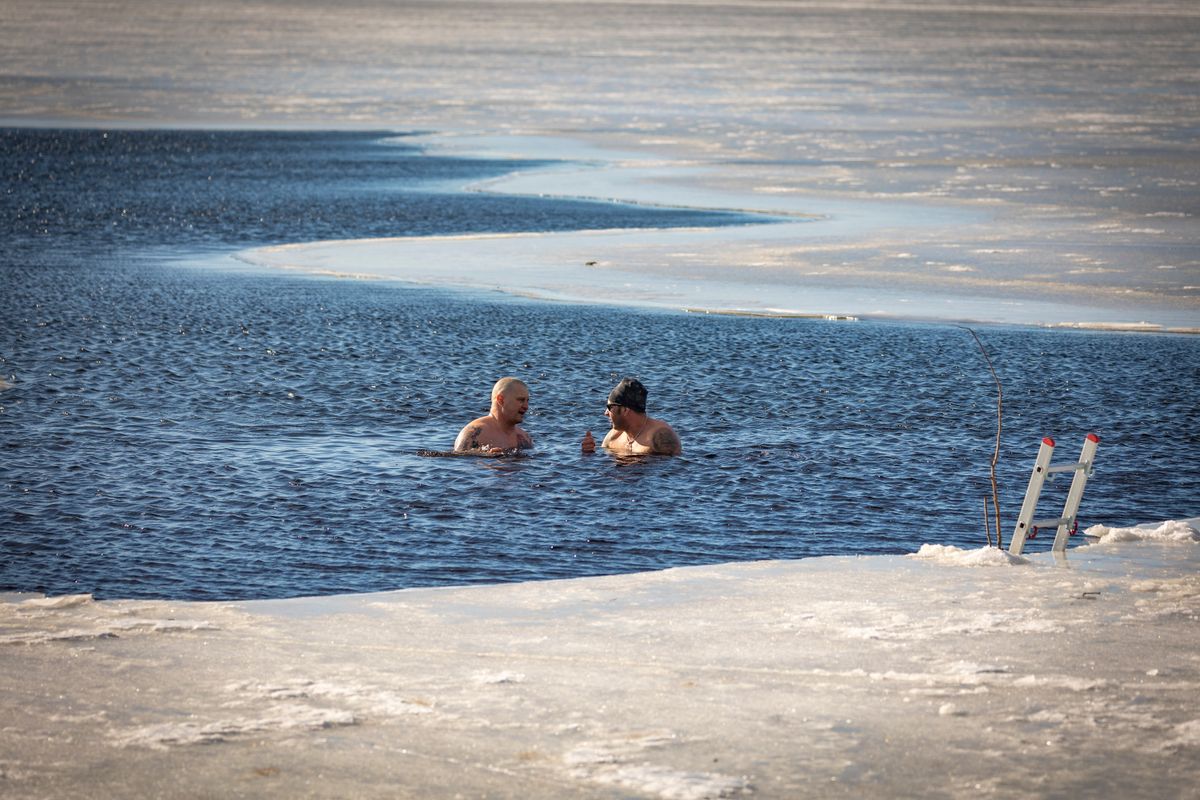
A tub in your garden is controlled. A lake, river, or the sea is not. Currents, depth, and cold combine fast. Save open water for when you’re experienced, and even then, go with someone. For your first weeks, plunge where you can stand up and step out in one move, with another person around. Cold makes people overconfident right before it makes them clumsy.
Who should skip it, or ask a doctor first
Cold immersion spikes your heart rate and blood pressure on entry. For most people that’s a brief, healthy stressor. For some it’s a real hazard. Talk to your doctor before you start, or skip it, if you have:
- Any heart condition, arrhythmia, or history of cardiac events
- High or poorly controlled blood pressure
- Raynaud’s or a circulatory disorder
- A pregnancy
- Epilepsy, or anything affected by a big adrenaline spike
This isn’t a formality. Cold water has triggered cardiac events in people who didn’t know they were at risk. If you’re unsure, that conversation costs you five minutes.
The after-drop, and the rewarming mistake
Here’s the counterintuitive one. You keep getting colder after you get out. Cold blood trapped in your limbs returns to your core, so your temperature can keep falling for several minutes. That’s the after-drop, and it’s why the finish matters as much as the plunge.
Most beginners want to sprint into a scalding shower. Don’t. A sudden blast of heat opens your blood vessels fast, which can drop your blood pressure and make you faint or feel sick, right when your core is still cooling. Instead:
- Get out, dry off, get into warm dry clothes.
- Rewarm by gentle movement: walk around, do some light air squats.
- A warm (not scalding) drink is fine. A hot shower can wait until you’ve stopped cooling.
Bonus: rewarming under your own steam is also the Søberg “end on cold” principle, which is where more of the metabolic benefit lives anyway. Watch for the warning signs that you’ve overdone it: violent shivering that won’t stop, clumsiness, slurred speech, or confusion. Those are early hypothermia, and they mean warm up properly, now.
Time it early, and keep alcohol out of it
Cold nudges your alertness and body temperature up for a while, which is great in the morning and terrible at bedtime. Do your plunges early in the day. And never mix cold water with alcohol. It wrecks your judgment and your body’s ability to regulate temperature at the same time, which is exactly the wrong combination near cold water.
Start warm, stay short, get out when your body says so
The people who get hurt or quit almost always went too cold, too long, too soon. Start warmer than you think you need (see the four-week ramp in post 1) and progress slowly. Colder and longer isn’t tougher, it’s just riskier for no extra reward. Get out the moment you go numb, can’t control your breathing, or something feels off. Ego has no place in a cold tub.
Follow these and cold water stays firmly in the “good for you” column. Respect it like you’d respect a heavy barbell: great tool, bad thing to be careless with.
Ready to actually set one up? How to Start: Ice Bath Setup, Gear & Protocol. Want the payoff first? 10 Science-Backed Benefits of Ice Baths.
Education, not medical advice. If you have any doubt about your health and cold exposure, ask a doctor before you start.
Leave a Reply