
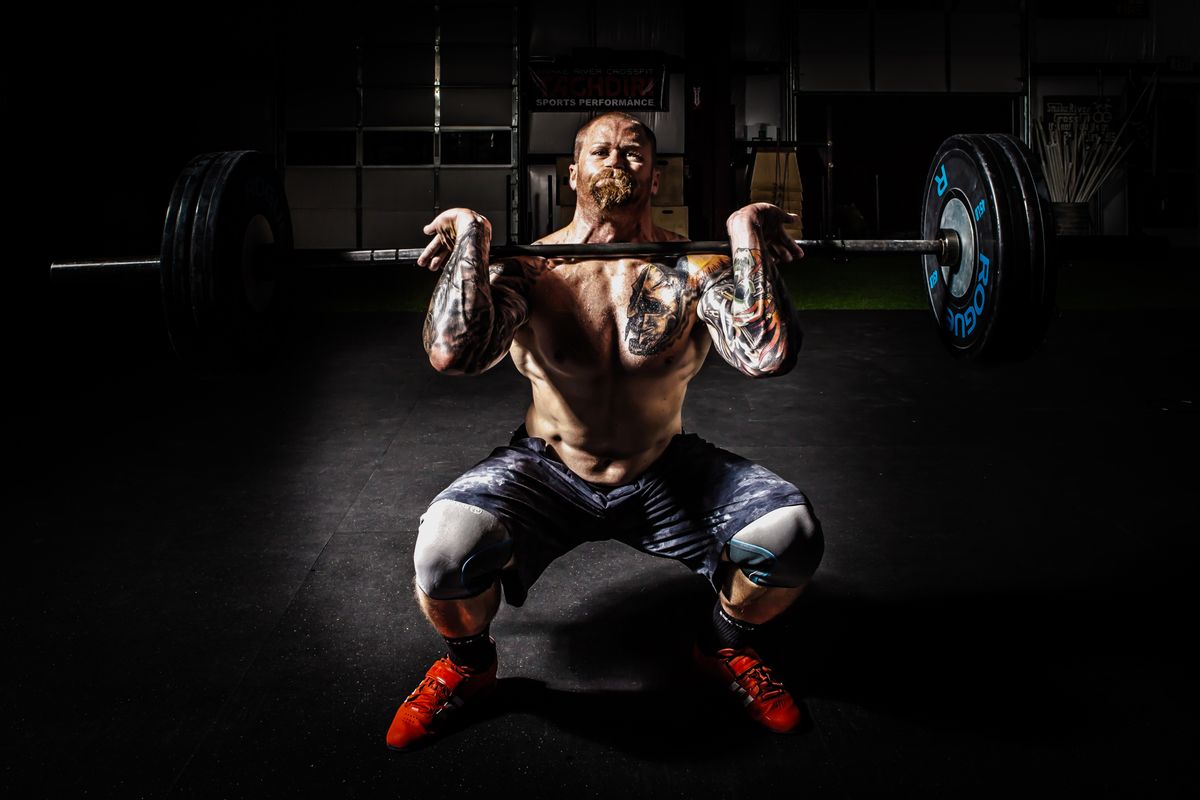
Two people train in the same gym, at the same hour, for the same six months, and get completely different bodies. One gets visibly bigger. The other barely changes shape but doubles what they can lift. Same effort, different results, and usually neither of them planned it. They just drifted into a way of training and got whatever that way gives.
That drift is the thing to fix. Strength and size come from pulling on two different levers, and if you yank both at random you end up mediocre at each. Decide which one you actually want, then set your loads and sets to match. Here is how the two differ, and how to aim.
What “strength” and “volume” actually mean
Strength is how much force you can produce: the weight on the bar for one hard rep. Getting stronger is partly your muscles growing, but a big chunk of it early on is your nervous system learning to recruit what you already have.
Volume is the total work you do: sets times reps times load, added up across a muscle for the week. It is the main dial for muscle size. More quality volume, more growth, up to a point where recovery taps out.
Those are two different targets, and they respond to two different kinds of training.
What drives strength: heavy and specific
If the goal is a bigger lift, the research is blunt about it. You get strong by lifting heavy, because strength is specific to the load you practise. That means:
- Heavy loads, roughly 85% of your one-rep max and up.
- Low reps, about 1 to 5 per set.
- Long rest, 2 to 5 minutes, so each set is fresh and forceful.
- Moderate total volume, because every rep is expensive.
You cannot pump your way to a big single with light weight and short rest. To lift heavy, you have to lift heavy. That part is not controversial.
What drives size: volume close to failure
Muscle growth is the opposite story. Load matters far less than it does for strength. What matters is accumulating enough hard sets:
- Moderate loads, roughly 60 to 80% of your max, work well, but so do lighter loads if you push close to failure.
- A wide rep range grows muscle, anywhere from about 5 to 30 reps, as long as the set ends near failure.
- Weekly volume is the driver: most muscles respond well to somewhere around 10 to 20 hard sets per week, split across sessions.
- Progressive overload underneath it all: more weight, more reps, or more sets over time.
The old idea that you must lift near-maximal to grow is outdated. You can build real muscle with lighter weights taken close to failure. Heavy loads are just more time-efficient, and they carry a strength bonus, which is why most size-focused lifters still keep some heavy work in.
Match the method to the goal
| Your goal | Load | Reps per set | Rest | Weekly focus |
|---|---|---|---|---|
| Max strength | 85%+ | 1 to 5 | 3 to 5 min | Fewer, heavier, high-quality sets |
| Muscle size | 60 to 80% | 6 to 15 (to near failure) | 1 to 2 min | 10 to 20 hard sets per muscle |
| Muscular endurance | 40 to 60% | 15 to 30 | 30 to 60 sec | High reps, short rest |
| General fitness | Mix | 6 to 12 | 1 to 3 min | A bit of everything, kept simple |
Where they overlap, and where people go wrong
They are not enemies. A bigger muscle has a higher strength ceiling, and getting stronger lets you handle more volume, which then grows the muscle. Beginners get both at once from almost any sensible program, so early on you barely have to choose.
The mistake is doing one and expecting the other. Grinding heavy triples for a year and wondering why you are not bigger. Chasing the pump with endless light sets and wondering why you are not stronger. The training was fine. It just was not aimed at the result they wanted.
How I set it up
I care about strength relative to bodyweight, because I want to move well for martial arts and calisthenics, not just look a certain way. So I bias toward heavy compound lifts for the big strength return, then bolt moderate-rep accessory work on top to add the volume that keeps the muscle growing. Strength first, size as the passenger. If your priority is the mirror, flip that emphasis.
Pick your lever before your next session, not halfway through it. Train for the goal you have, overload it patiently, and you stop being the person who trains hard for six months and drifts into whatever result shows up.
Whichever way you bias, do it without hurting yourself: see How to Avoid Injuries at the Gym. And if you are deciding how to split the week, read Full Body vs Split.
This is training education, not medical advice. If you are new to lifting or returning from injury, get cleared and ideally coached on the big lifts before you load them heavy.
Leave a Reply